Made in Canada vs. Canadian-Owned: The Competition Bureau & Consumer Guide
Demystifying Canadian origin claims: The Competition Bureau’s 51% vs. 98% rules, the legal distinction between domestic ownership and manufacturing, and how to spot deceptive retail marketing.
Founder & Software Architect
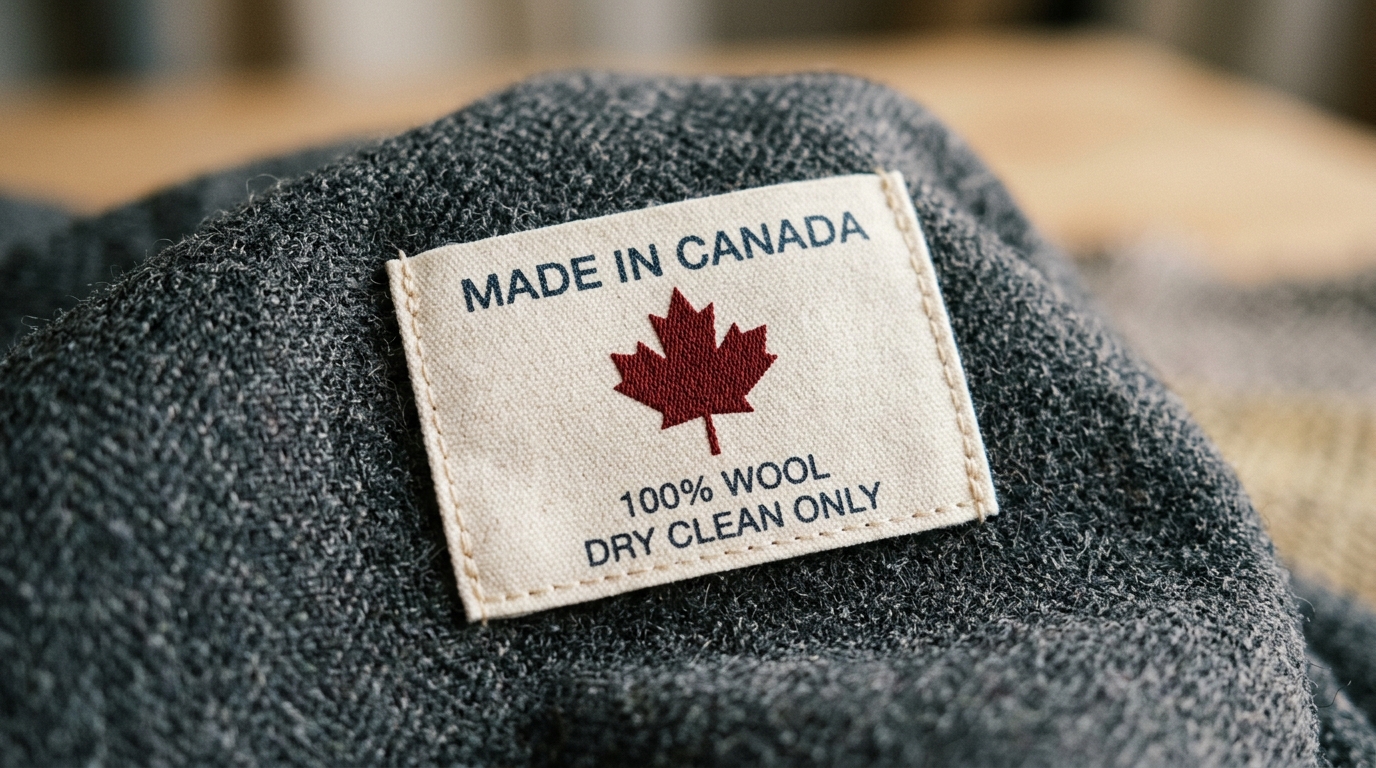
Walk down the aisle of any major Canadian department store or supermarket, and you will be inundated with maple leaves, red-and-white banners, and patriotic phrases: "Crafted for Canadians," "Proudly Canadian," "Designed in Montreal," and "Canada's Favorite." For conscious consumers attempting to keep their hard-earned dollars circulating within the Canadian economy, this marketing barrage creates an intentional fog of confusion.
A product sporting a vibrant red maple leaf can be 100% manufactured in an overseas sweatshop with zero Canadian input other than a graphic designer's vector file. Conversely, a generational maker handcrafting workwear in Truro, Nova Scotia may use imported cotton yarn because cotton cannot commercially grow in Canada's sub-Arctic climate. Knowing the legal nuances between "Product of Canada," "Made in Canada," and "Canadian-Owned" is the single most powerful tool in conscious consumerism.
The Illusion of the Maple Leaf
Under Canadian federal law, the depiction of a maple leaf on consumer packaging is not strictly regulated as a protected certification mark on general merchandise unless it is used in a manner that creates a materially false or misleading representation under the Competition Act.
Because corporate marketers understand the immense goodwill Canadian consumers harbor toward local manufacturing, they routinely craft ambiguous claims. A brand might register a trademark featuring a maple leaf logo, print the word "Canadian" in giant bold letters, and relegate the required origin disclosure—"Made in Cambodia"—to an unreadable 4-point font hidden inside an interior hem tag.
Competition Bureau Legal Definitions: 98% vs. 51%
The Competition Bureau of Canada publishes strict Enforcement Guidelines regarding origin claims. Here is the legal breakdown every shopper must memorize:
| Legal Claim | Domestic Cost Requirement | Transformation Requirement | Typical Examples |
|---|---|---|---|
| "Product of Canada" | 98% or more of direct costs | All significant processing occurred in Canada | Quebec maple syrup, PEI potatoes, Alberta beef |
| "Made in Canada with Imported Parts" | At least 51% of direct costs | Last substantial transformation occurred in Canada | Quartz Co. parkas, Meyer PEI cookware, Stanfield's underwear |
| "Assembled in Canada" | Less than 51% direct costs | Components screwed/snapped together locally | Imported electronics placed in local casing |
| "Designed in Canada" | 0% manufacturing cost requirement | No domestic manufacturing or transformation | Lululemon apparel, Herschel backpacks, Joe Fresh |
Domestic Ownership vs. Domestic Manufacturing
A frequent point of confusion among consumers is conflating corporate headquarters with domestic production. There are four distinct quadrants in the Canadian market:
- Quadrant 1: Canadian Owned & Canadian Made (The Gold Standard): Independent makers like Meyer Canada (PEI cookware), Stanfield's (Nova Scotia apparel), and House of Blanks (Ontario fleece). Profits remain in Canada, and domestic union/living wages are paid to local workers.
- Quadrant 2: Foreign Owned, but Canadian Made: A multinational corporation that operates domestic factories employing Canadian workers. Examples include Toyota and Honda automotive manufacturing plants in Cambridge and Alliston, Ontario.
- Quadrant 3: Canadian Owned, but Offshore Made: Companies founded in Canada whose headquarters remain in Toronto, Vancouver, or Montreal, but whose physical goods are manufactured in Asia or South America. Examples include Lululemon and Herschel Supply Co. Profits return to Canadian shareholders, but manufacturing jobs exist overseas.
- Quadrant 4: Foreign Owned & Offshore Made (The Impostors): Brands that trade heavily on Canadian nostalgia while having zero domestic operations or Canadian ownership.
Case Studies: Heritage Brands Under Foreign Control
1. Tim Hortons: Brazilian Private Equity
Few brands have wrapped themselves more tightly in Canadian identity than Tim Hortons. Yet in 2014, Tim Hortons was acquired by 3G Capital (a Brazilian multi-billion-dollar private equity firm) and merged into Restaurant Brands International (RBI). While individual franchise owners and counter staff are local, corporate dividends flow to international private equity shareholders.
2. Roots Canada: American Private Equity
Roots built its iconic beaver brand on Canadian summer camp lore and cozy cabin fleece. In 2015, founders Michael Budman and Don Green sold majority ownership to Searchlight Capital Partners, an American private investment firm. While Roots still operates a leather factory in Toronto producing select leather goods, the overwhelming majority of their apparel is manufactured in overseas contract facilities.
3. Arc'teryx: Chinese Sports Conglomerate
Founded in North Vancouver in 1989, Arc'teryx revolutionized technical alpine climbing apparel. While Arc'teryx maintains their legendary "ARC'One" design and manufacturing facility in New Westminster, BC for high-end LEAF and Alpha SV garments, the company was acquired by Finnish conglomerate Amer Sports, which was subsequently acquired by Anta Sports (a major Chinese sportswear conglomerate). Today, the majority of retail Arc'teryx consumer products are manufactured in Vietnam, China, and Indonesia.
The Economic Multiplier: Where Does Your Dollar Actually Go?
Independent economic studies consistently demonstrate that when you purchase from a locally owned Canadian business that manufactures domestically, approximately $68 of every $100 spent stays in the Canadian economy through employee wages, local business tax contributions, domestic freight contracts, and reinvestment in community vendors.
In contrast, when you spend $100 at a multinational foreign conglomerate selling offshore-imported merchandise, only $14 to $18 remains in Canada—primarily in low-wage retail floor staff hours. The remainder immediately exits the country in corporate dividend repatriations and offshore supply chains.
The 6-Step Consumer Origin Verification Audit
Before checking out at any retail store or online cart, perform this 30-second audit:
- Inspect the Permanent Fabric / Care Label: By federal law (under the Textile Labelling Act), apparel must clearly state the country of manufacture on a permanent sewn-in label. Disregard paper hangtags; read the sewn label.
- Check for CA Identification Numbers: In Canada, textile manufacturers and importers register a 5-digit CA number (e.g., CA 00123). You can look up the registered entity in the Competition Bureau CA Number database to see who legally imported or manufactured the item.
- Look for Specific City Disclosures: Authentic domestic makers are intensely proud of their facilities. They will explicitly state "Knit in Truro, NS" or "Cut and sewn in Montreal, QC" on their product pages. Vague statements like "Rooted in Canada" almost always indicate offshore manufacturing.
- Verify the 51% vs 98% Thresholds: For food products, look for "Product of Canada" to ensure 98%+ domestic ingredients. "Prepared in Canada" simply means foreign ingredients were mixed, cooked, or packaged in a Canadian facility.
- Examine Corporate Ownership Registries: Use federal and provincial business registries (Corporations Canada) or CanadianOwn to verify who ultimately holds controlling shares.
- Check Repair and Warranty Infrastructure: Genuine Canadian manufacturers operate local repair workshops in Canada. If a warranty replacement requires shipping your coat or boots to an international return hub, they lack domestic manufacturing infrastructure.
Common Deceptive Marketing Loopholes
Be vigilant against these three classic retail misdirection tactics:
- "Canadian Design": Used extensively on bags, footwear, and consumer electronics to imply Canadian quality while obscuring offshore contract assembly.
- "Packaged in Canada": Common in the pantry aisle. Foreign honey, olive oils, or nuts imported in bulk shipping containers and poured into glass jars in Ontario can carry this label legally.
- The Small-Batch Canadian Flag Sticker: Retailers frequently place red maple leaf stickers on shelf price tags. These stickers often refer to the retail chain's ownership rather than the item itself. Always check the physical product label.
Frequently Asked Questions
- Is it illegal for a brand to put a Canadian flag on a foreign-made shirt?
- It is not automatically illegal unless the overall impression created by the marketing is deemed deceptive under Section 52 or 74.01 of the Competition Act. If the shirt prominently states "Made in Bangladesh" on the required care label, courts have historically ruled that the consumer was provided accurate origin information, even if the graphic design is patriotic.
- Why can’t Canadian brands make 100% of a cotton garment in Canada?
- Commercial cotton (Gossypium hirsutum) requires long, frost-free growing seasons (180+ days) and high heat units that do not exist in Canada's agricultural climate. Therefore, raw cotton lint must be imported from the United States, India, or Turkey. However, spinning yarn, knitting jersey, bleaching, dyeing, cutting, and sewing can and does happen right here in Canadian mills.
- How does CanadianOwn verify brands?
- CanadianOwn reviews corporate registry filings, factory locations, import documentation, and manufacturer disclosures to provide transparent, unvarnished data on both corporate ownership and physical production locations.
Written by Asif Khan
Founder & Software Architect • CanadianOwn
Asif is the creator and software architect behind CanadianOwn. Passionate about local manufacturing preservation, transparent corporate ownership, and consumer empowerment, he writes deeply researched buying guides to help Canadians make informed domestic purchasing decisions.
Learn more about our mission →