The Canadian Sleep Sanctuary: Ethical Mattresses, Canadian Steel Coils, & PEI Wool Blankets
A comprehensive buyer’s investigation into Canadian mattress manufacturing: fiberglass-free flame barriers, domestic pocket coil steel, natural Dunlop latex, and PEI’s historic 1932 woolen mill.
Founder & Software Architect
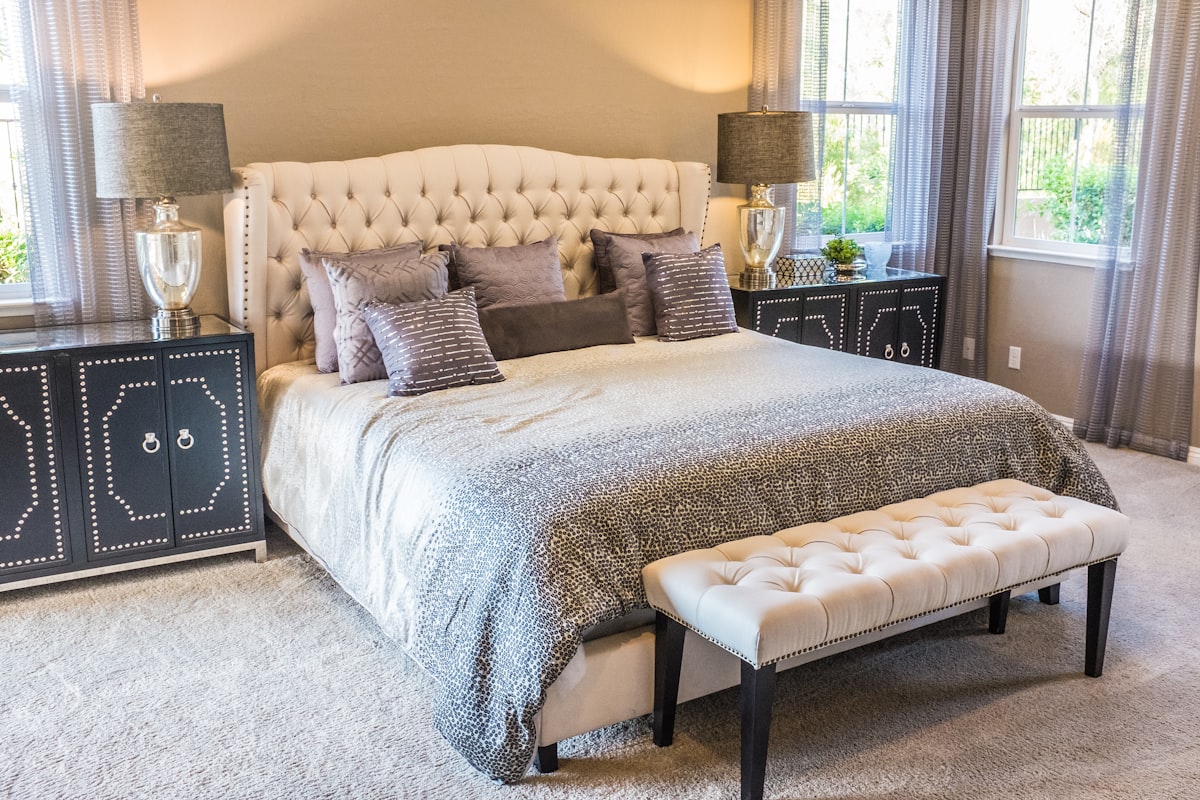
Humans spend approximately one-third of their lives with their face, respiratory system, and body resting directly against a mattress. Yet until recently, few consumers scrutinized what actually sits beneath their fitted sheets. In the multi-billion-dollar bed-in-a-box industry, aggressive venture-backed advertising frequently masks imported polyurethane foams laden with volatile organic compounds (VOCs), formaldehyde adhesives, and hidden fiberglass flame barriers that can contaminate an entire household if unzipped.
By contrast, Canadian mattress and bedding artisans operate under some of the most rigorous environmental and consumer safety regulations in the world. Utilizing Canadian-drawn tempered pocket coils, CertiPUR-US certified non-off-gassing foams, and natural Atlantic virgin wool, domestic makers provide rejuvenating, non-toxic sleep. Here is what you must know before buying your next mattress.
The Toxic Realities of Modern Mattresses
Traditional mass-market mattresses produced in deregulated offshore factories are essentially solid petroleum blocks. Polyurethane foam is synthesized from crude oil polyols and diisocyanates. When newly unboxed, cheap imported mattresses release a pungent chemical odor—a process known as off-gassing.
This vapor contains chemical compounds such as toluene, benzene, and methylene chloride. In poorly ventilated bedrooms, inhaling these vapors over eight hours of sleep can trigger headaches, morning respiratory congestion, sinus irritation, and long-term immunological disruption. Canadian mattress manufacturers must adhere to strict Health Canada VOC emission thresholds, ensuring third-party CertiPUR-US® and OEKO-TEX® verification with non-detectable levels of heavy metals and ozone depleters.
The Fiberglass Hazard vs. Natural Canadian Wool
By law, all mattresses sold in North America must meet stringent open-flame flammability standards to prevent rapid bedroom fires. To pass this test cheaply, many imported mattress brands encase their foam cores in an inner fire-retardant sock woven from glass fiber filaments (fiberglass).
If a consumer unzips the outer mattress cover to wash it, or if the cover experiences internal friction wear, millions of microscopic, razor-sharp glass fiber shards can contaminate the room. Removing airborne fiberglass often requires professional hazardous abatement teams, costing tens of thousands of dollars in ruined HVAC systems, clothing, and furniture.
Premium Canadian manufacturers completely reject fiberglass. Instead, they utilize 100% pure Canadian or New Zealand sheep's wool as a natural fire barrier. Wool fibers contain natural moisture and keratin, making them inherently flame-resistant. Wool does not melt or emit toxic fumes; when exposed to flame, it naturally chars into self-extinguishing ash while providing breathable, temperature-regulating cushioning.
Mattress Anatomy: Coils, Foams, & Natural Latex
Understanding the internal engineering helps you choose the perfect sleep surface:
1. Canadian Tempered Pocket Coils
Unlike old-fashioned continuous wire innersprings that squeak and bounce across the entire bed, individual pocket coils are wound from heavy-gauge Canadian steel wire (typically 13 to 16 gauge) in Ontario and Quebec steel mills. Each spring is sealed inside an individual fabric sleeve. Because each coil compresses independently, pocket coils deliver pinpoint spinal alignment, reinforced lumbar support, and zero motion transfer when your partner rolls over.
2. High-Density Cooling Gel Foams
Traditional memory foam traps radiant body heat, causing hot, restless sleep during humid Canadian summer months. Domestic engineers developed open-cell memory foams infused with microscopic cooling gel beads. These open pores allow warm air to exhaust out the mattress sides while contouring comfortably to pressure points on shoulders and hips.
3. GOLS-Certified Dunlop Organic Latex
Harvested sustainably from the sap of rubber trees (Hevea brasiliensis), organic latex provides a bouncy, buoyant sleep surface that resists sagging for 20+ years. Natural latex is naturally antimicrobial, hypoallergenic, and impervious to dust mites and bedbugs.
Mattress Construction Performance Comparison Matrix
Review the strengths of each sleep architecture:
| Mattress Type | Cooling & Breathability | Spinal Edge Support | Expected Lifespan | Best Sleeping Postures |
|---|---|---|---|---|
| All-Foam Gel (Douglas) | Good (Open-cell gel) | Moderate | 8 – 10 Years | Side sleepers, light-to-average weight back sleepers |
| Pocket Coil Hybrid (Silk & Snow) | Excellent (High airflow coils) | Exceptional (Reinforced perimeter steel) | 10 – 15 Years | Combination sleepers, back pain sufferers, couples |
| 100% Organic Latex (Fawcett) | Superior (Pin-core aeration) | High (Buoyant resilient rebound) | 20 – 25 Years | Eco-conscious buyers, stomach sleepers, back sleepers |
The Top Verified Canadian Sleep Brands
1. Douglas by GoodMorning.com (Edmonton, AB & Toronto, ON)
Launched in 2017, Douglas set out to craft the definitive Canadian mattress specifically calibrated for our unique domestic seasonal climate. Produced in factories in Ontario and Quebec, Douglas features a three-layer foam design: cooling ecoLight® gel foam, Elastex transition foam, and motion-isolation support foam, wrapped in an iconic red-and-white mountain-themed washable cover.
2. Silk & Snow (Toronto, Ontario)
Silk & Snow takes a master-craftsman approach to sleep. Their Silk & Snow Hybrid pairs zoned Canadian steel pocket coils with high-density memory foam, while their Natural Mattress combines GOLS-certified organic latex with certified organic cotton and wool. Every mattress is crafted in Ontario or Quebec workshops using transparently disclosed North American components.
Atlantic Canada’s Historic Treasure: MacAusland’s Woolen Mills
No Canadian bed is complete without authentic heritage bedding. Located in Bloomfield, Prince Edward Island, MacAusland’s Woolen Mills is the only operating mill in Atlantic Canada that still produces 100% pure virgin wool blankets from raw fleece.
Operating continuously since 1932, the MacAusland family cleans, cards, spins, and weaves untreated domestic Canadian sheep's wool on antique mechanical looms. Unlike synthetic polyester fleece throws that generate static cling and shed microplastics in the wash, a MacAusland wool blanket provides breathable, heavyweight sub-zero warmth that repels moisture, remains odorless, and lasts for multiple generations.
The Reality of 100-Night Sleep Trials & Eco-Returns
Most reputable Canadian mattress companies offer a 100 to 365-night in-home trial. Many shoppers wonder: what happens to a returned mattress?
In Canada, returned mattresses cannot legally be repackaged or sold as new. Responsible Canadian brands partner directly with registered domestic charities—such as Habitat for Humanity, local women's shelters, and furniture banks—to donate returned mattresses to families in need. If local donation is unfeasible due to municipal health bylaws, the mattresses are sent to domestic recycling facilities where steel coils are melted down and foam layers are shredded into carpet underlay padding.
Frequently Asked Questions
- How long do Canadian memory foam mattresses take to off-gas?
- CertiPUR-US certified Canadian foams typically release a faint, harmless fresh-foam scent for only 4 to 24 hours after unboxing. Because they do not contain toxic chemical blowing agents or formaldehyde, opening a window during initial setup ensures rapid dissipation.
- Do I need a box spring with a modern Canadian mattress?
- No. Most modern foam and hybrid mattresses are designed for solid platform beds, slatted frames (with slats no more than 3 inches apart), or adjustable bases. Traditional flexible box springs can cause modern pocket-coil mattresses to sag prematurely.
- How often should I rotate a one-sided mattress?
- Even though modern Canadian mattresses are "no-flip" designs, you should rotate your mattress 180 degrees (head to foot) every 3 to 6 months. This distributes body weight evenly and prevents localized indentation depressions where you sleep.
Written by Asif Khan
Founder & Software Architect • CanadianOwn
Asif is the creator and software architect behind CanadianOwn. Passionate about local manufacturing preservation, transparent corporate ownership, and consumer empowerment, he writes deeply researched buying guides to help Canadians make informed domestic purchasing decisions.
Learn more about our mission →